
OpFlow Data Analytics: Instrument Trays
OpFlow collects real-time instrument usage data for its analytics platform. Data collection on the instruments that were used during the case only takes 60 to 90 seconds and is not duplicative of other standard processes taking place.
The process can be performed at a time during a surgical case that is convenient to the OR staff and surgeon. There is no patient data retained and the process can be rapidly implemented.
View fullsize
<img src="https://images.squarespace-cdn.com/content/v1/5a7cf6304c0dbf7eb12ca0bf/1565284983579-OX2VK0GUS167JPC1ES2L/Usage.png" alt="Usage.png" />
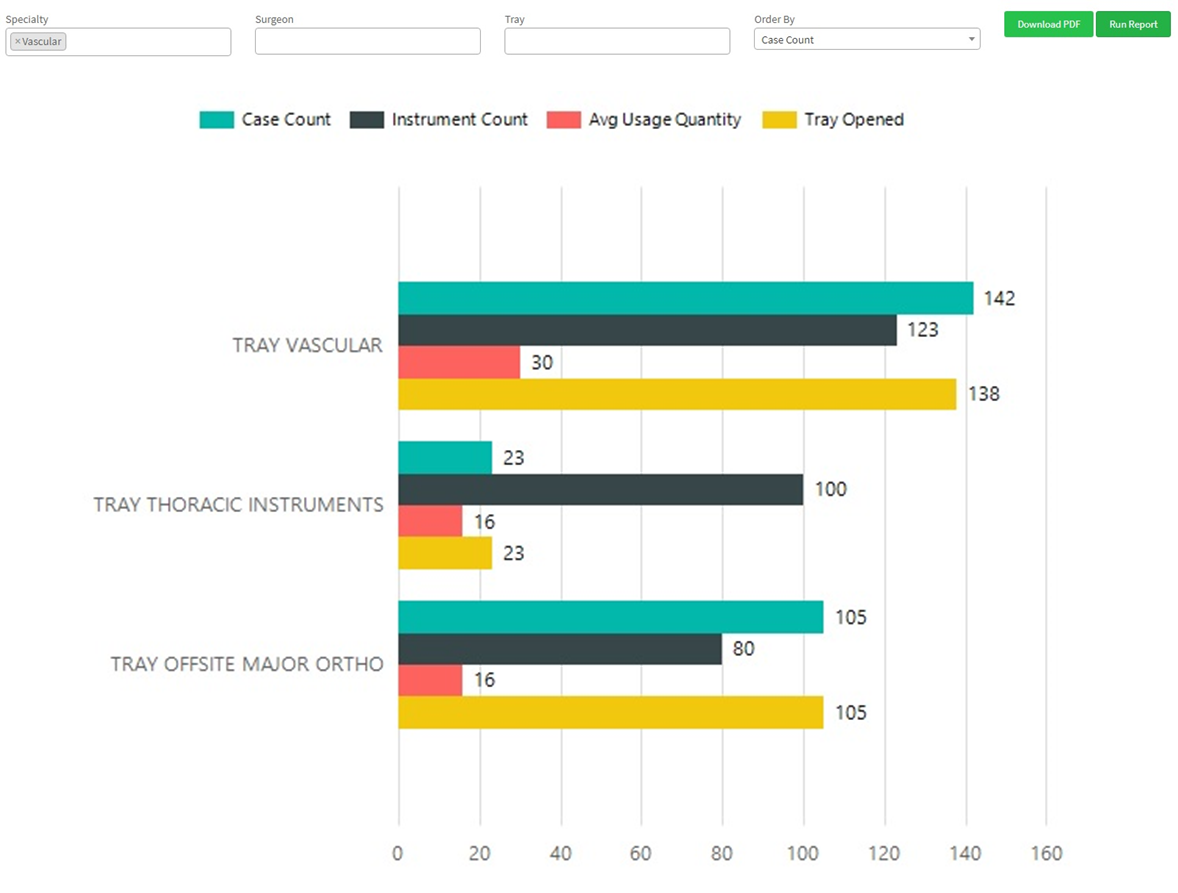
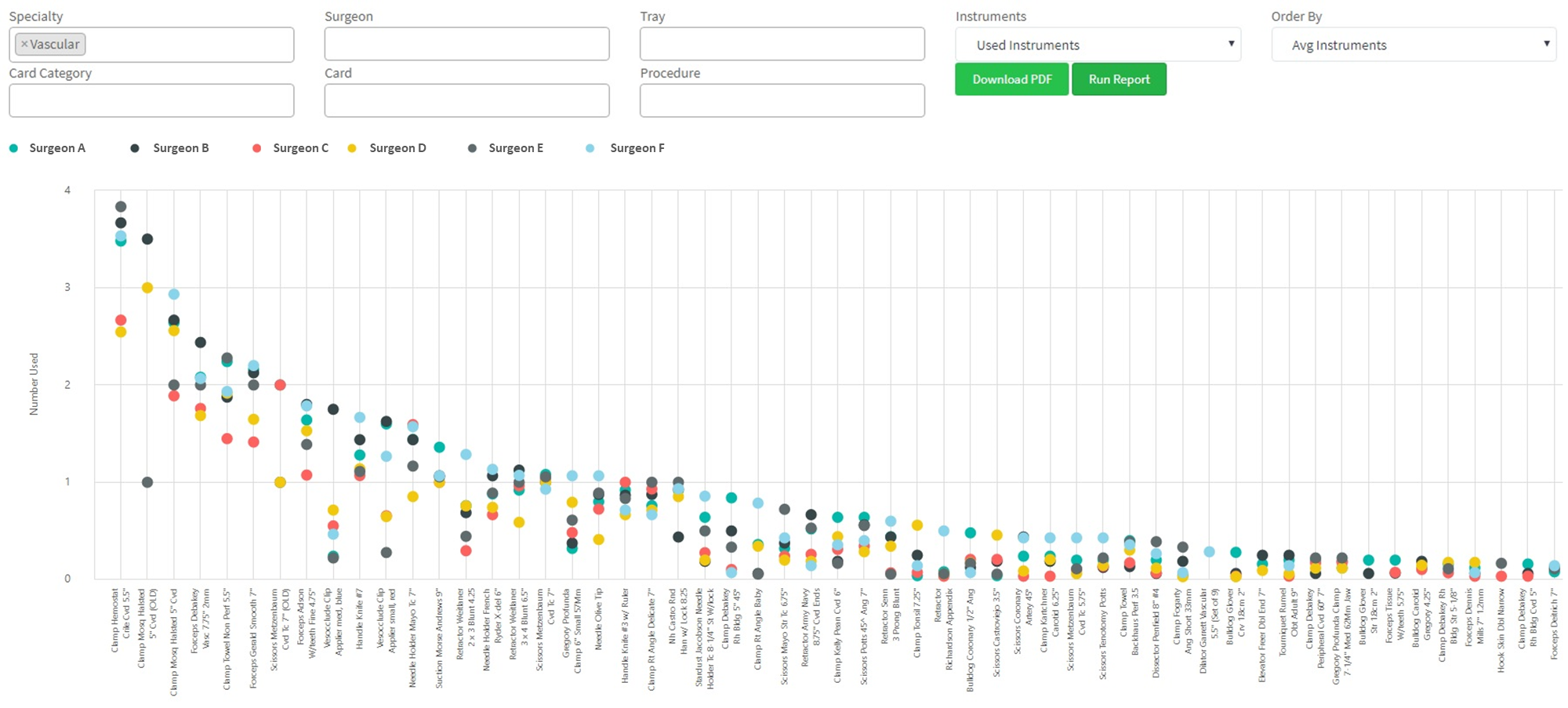
The analytics generated from the data are powerful. The OpFlow analytics dashboard will summarize the volume of cases for which data were collected, the average number of instruments used per instrument tray, and whether an instrument tray was opened for a case. A surgeon concordance report provides a greater level of detail, enabling stratification of the data by surgical service line or specialty, surgeon, preference card, procedure type, and instrument tray.
View fullsize<img src="https://images.squarespace-cdn.com/content/v1/5a7cf6304c0dbf7eb12ca0bf/1565285025758-X5DLID3LYFHQWJLYQT8W/Concordance.png" alt="Concordance.png" />
This provides immediate visualization of the instruments that are necessary and those that can be removed from the tray. Further analysis is performed to identify any overlap between instrument trays for a given procedure or preference card, so that the number of trays opened in the room may also be reduced.
There is a direct correlation between reducing the number of instruments on each tray and faster turnover and set-up times in the OR, improved sterile processing quality and throughput, and a decreased need for instrument re-purchase by avoiding unnecessary instrument depreciation. Those factors along with other benefits yield substantial cost savings for hospitals and surgery centers.